
Rainy window lo-fi
Lo-fi hip hop, cozy and melancholic, dusty boom-bap drums, mellow Rhodes chords and soft rain ambience, slow laid-back groove, for studying on a rainy afternoon.
A practical library of AI music prompts grouped by genre and use, plus a simple prompt formula, the words that help or hurt, and how to adjust a prompt after you hear the result.
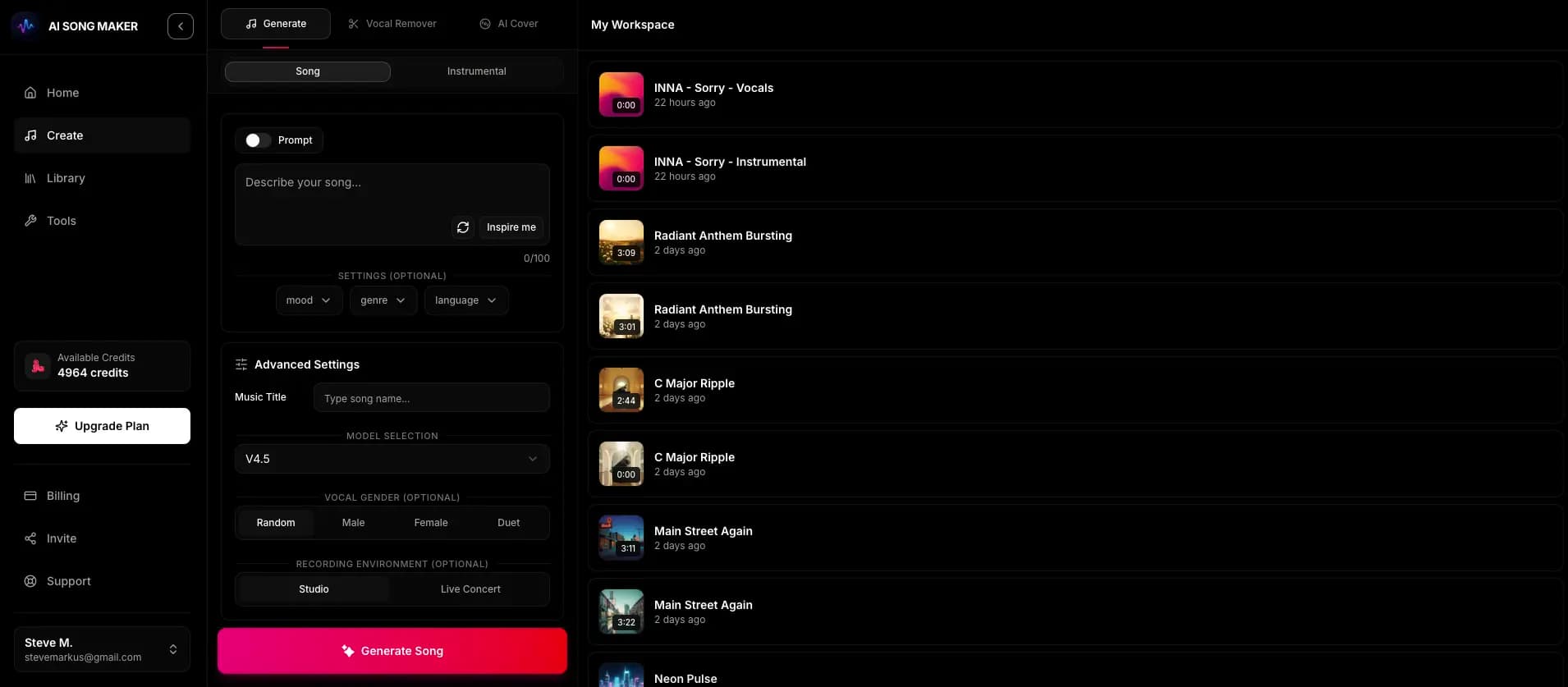
Most good AI music prompts cover the same five ingredients. Write them in this order as one or two natural sentences, then use the examples below as templates.
Start with the most specific genre you can name: "bossa nova" rather than "Latin", "synthwave" rather than "electronic". You can combine two, like "lo-fi jazz", but more than two gets muddy.
Add a feeling plus an energy level: "wistful but steady", "joyful and bouncy", "tense and building".
Name the instruments that should lead, such as "nylon guitar and soft brushed drums". A short list gives a cleaner mix than a long one.
Describe the pace and how it moves: "slow", "mid-tempo groove", "builds to a big chorus", "steady with no big changes".
Finish with what it is for or what it is about: "for a cooking video", "about leaving home for the first time". For vocal songs, add a vocal direction, such as "warm female vocal".
Pair these with the instrumental switch for study, work and relaxation. They favor steady energy and soft textures.
Lo-fi hip hop, cozy and melancholic, dusty boom-bap drums, mellow Rhodes chords and soft rain ambience, slow laid-back groove, for studying on a rainy afternoon.
Light cafe jazz, warm and unhurried, brushed drums, upright bass and gentle piano, mid-tempo swing, for a relaxed morning routine.
Minimal ambient, calm and spacious, evolving synth pads and a distant felt piano, very slow, consistent energy with no drums, for long focus sessions.
Soft solo piano, tender and peaceful, sparse melody with gentle sustain, very slow, quiet throughout, for winding down before sleep.
Meditative new age, serene and grounded, singing bowls, soft flute and a low warm drone, slow and breathing, for a guided meditation.
These lean on rhythm and energy. Use "drop" and "build" for dance tracks, and describe drum sounds directly for beats.
Progressive house, euphoric and uplifting, bright supersaw chords, driving four-on-the-floor kick and a big piano riff, builds to a massive drop, for a festival-style edit.
Retro synthwave, nostalgic and cinematic, analog bass arpeggio, gated reverb drums and shimmering pads, driving mid-tempo, for a neon night drive.
Hypnotic techno, dark and relentless, pounding kick, rumbling bass and metallic percussion, fast steady tempo with slow filter sweeps.
Classic boom-bap hip hop instrumental, gritty and confident, chopped soul sample feel, punchy snare and deep bass, mid-tempo head-nod groove.
Melodic trap beat, moody and atmospheric, heavy sliding 808s, rolling hi-hats and a sad piano melody, half-time feel with a hard-hitting drop.
Future bass, dreamy and bittersweet, lush wobbling chords, vocal-like synth chops and snappy drums, mid-tempo with a soft emotional drop.
Describe the scene and the shape of the tension. Words like "builds", "swells" and "resolves" matter more here than in other genres.
Epic orchestral trailer music, heroic and intense, soaring strings, brass fanfares and thunderous taiko drums, starts quiet and builds to a triumphant climax.
Dark cinematic underscore, suspenseful and curious, pizzicato strings, low piano notes and ticking percussion, slow and restrained, for a detective scene.
Whimsical fantasy folk, warm and cheerful, harp, flute and light hand percussion, gentle mid-tempo, for a peaceful village in a role-playing game.
Aggressive orchestral metal, frantic and powerful, distorted guitars, pounding drums and choir-like pads, fast tempo, for a final boss fight.
Upbeat chiptune, playful and energetic, bright square-wave lead, bouncy bass and snappy 8-bit drums, fast tempo, for a platformer level.
Cinematic piano and strings, bittersweet and hopeful, solo piano joined by a slow string section, gentle swell that resolves softly, for a film's closing scene.
Leave the instrumental switch off. Add a vocal direction and a theme so the AI knows what the song is about. If the exact words matter, use lyrics mode instead.
Upbeat summer pop with a bright female vocal, carefree and catchy, plucky guitar, handclaps and punchy drums, mid-tempo, about a road trip with friends.
Emotional piano ballad with a soulful male vocal, heartbroken and vulnerable, piano and swelling strings, slow, about letting go of someone you love.
Indie rock with a raspy male vocal, restless and defiant, jangly electric guitars and driving drums, fast, builds to a shout-along chorus about starting over.
Acoustic country with a warm female vocal, nostalgic and sweet, acoustic guitar, fiddle and light brushed drums, mid-tempo, about growing up in a small town.
Smooth R&B with an airy female vocal, intimate and warm, soft electric piano, deep bass and crisp finger snaps, slow groove, about a late-night conversation.
Cheerful children's pop with a friendly vocal, playful and silly, ukulele, xylophone and handclaps, bouncy mid-tempo, about a birthday party with cake and balloons.
Small wording choices change results more than prompt length. These patterns come up again and again when refining prompts.
"Bossa nova", "drum and bass", "chamber folk" and "90s boom-bap" each point to a recognizable sound.
"Dusty drums", "warm Rhodes", "distorted bass" and "airy pads" describe texture as well as instrument.
"Builds", "drops", "steady", "fades out" and "stripped-back" tell the model how the track should change over time.
"Amazing", "cool", "professional" and "high quality" do not describe a sound, so they add nothing.
"Relaxing and aggressive" or "minimal with a full orchestra" pull in opposite directions. Pick one or describe the transition.
Instead of naming real artists or songs, describe the qualities you like: the vocal tone, the era, the instruments and the energy.
A list of ten instruments and five genres usually produces a cluttered or unfocused result. Trim to the essentials.
Each creation returns two versions. Listen to both, name what missed, then change one thing and generate again.
Remove an instrument and add "minimal" or "sparse". Moving from four instruments to two often cleans up the mix.
Add a movement word such as "builds to a big chorus" or "adds drums halfway through", or raise the energy word from "calm" to "uplifting".
Swap the tempo word: "slow" to "mid-tempo", or "driving" to "laid-back". A BPM number can help as a hint.
Put the instrument you want first and say where the others sit, such as "piano leads, guitar quietly in the background".
Add a delivery word: "intimate", "breathy", "powerful", "conversational". Changing the vocal gender preference can also shift the character.
Keep the prompt, generate again for new takes, or on paid plans try a different model option. Small tweaks beat full rewrites once you are close.
Six more prompts built around a specific job. Most of these work well with the instrumental switch on.
Light corporate pop instrumental, friendly and focused, soft plucked synths, muted guitar and gentle beat, mid-tempo, steady energy under a voice-over.
Punchy indie funk instrumental, confident and warm, slap bass, clean guitar licks and tight drums, upbeat, strong start and a clean ending.
High-energy electro pop instrumental, motivating and fierce, pounding kick, gritty bass and bright synth stabs, fast tempo, for a HIIT workout.
Warm acoustic folk, tender and hopeful, fingerpicked guitar, soft cello and light piano, slow, gentle swell near the end, for a wedding slideshow.
Bouncy hyperpop-inspired beat, playful and bold, glitchy synths, punchy 808 and snappy claps, fast, catchy from the very first bar.
Chic downtempo lounge, relaxed and stylish, smooth bass, soft electric piano and gentle percussion, mid-tempo, steady and unobtrusive, for an in-store playlist.
A good AI music prompt names a specific genre, a mood with an energy level, two to four instruments, a tempo or shape, and a use case or theme. One or two natural sentences are usually enough.
Around 20 to 40 words works well for most tracks. Longer prompts are fine if every word describes the sound, but lists of many genres and instruments tend to produce unfocused results.
Yes. Paste any prompt into the create page, choose instrumental or vocals, and generate. Each creation uses 2 credits and returns two versions. Then adjust one detail at a time to make it your own.
You can include a BPM as a hint, but it is not guaranteed to be followed exactly. Tempo feel words such as "slow", "mid-tempo" or "driving" tend to be more dependable.
Describe the sound instead: the era, vocal tone, instruments and energy you like. This gives more predictable results and avoids imitating real artists.
Use lyrics mode. Paste up to 5,000 characters of your own lyrics, add a style description like the ones on this page, and the AI sings your words.
Copy one of the examples, paste it into the create page and hear two versions. Then tweak a single word and compare.
Try It Now